Tuesday, April 10, 2012

How to have a completely stress free vacation


If you’re thinking of booking a vacation where relaxation is your main concern, you might want to opt for an all-inclusive package where some of the potentially stressful elements of your trip are taken care of. Whether you’re booking far in advance or last minute, more travel agents are recognizing the popularity of package holidays and are offering more of them.

It’s important to bare in mind that even if you have a hassle-free all-inclusive vacation booked, there is still a chance that things could go wrong, especially on the way to your destination. Check what your package includes, paying special attention to whether it covers costs like airport hotels, lounges and parking. If these aren't part of your booking, you can easily organize these with services such as Skypark’s airport services. If you don’t fancy rushing to the airport on the day of your departure, airport hotels are a blessing and eradicate the worry of trains and buses not turning up if you’re using public transport to get to the airport. They’re also a great idea if you’re driving yourself or catching a taxi and getting stuck in traffic in transit is a concern. Indeed, why not start your vacation at the airport? Book your place in an airport lounge and enjoy the comfort and hospitality it offers while you’re waiting for your flight – a move you’ll be grateful of if your flight is delayed.

On the other hand, traveling to the airport on the same day of your flight is also feasible if you leave your home well in advance and arrange a reliable mode of transport to get you there. Airport parking removes the hassle of trying to find a parking space if you’re driving to the airport in your car, and can actually be much cheaper – and easier to access – than using an ordinary, nearby car park.

Wednesday, March 14, 2012


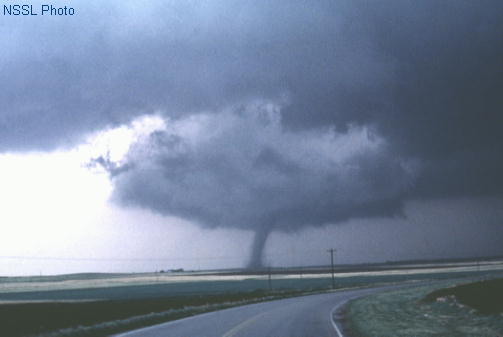
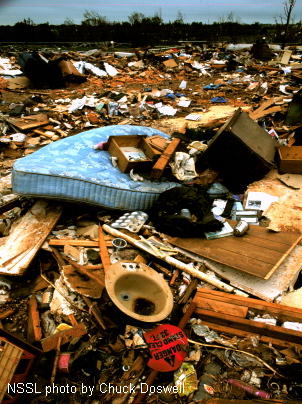
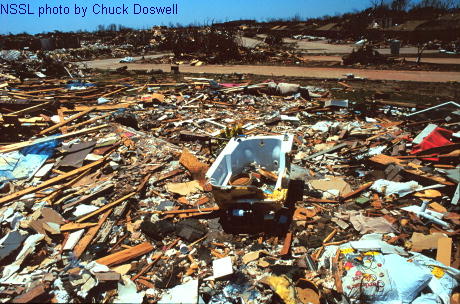
There is no such thing as guaranteed safety inside a tornado. Freak accidents happen; and the most violent tornadoes can level and blow away almost any house and its occupants. Extremely violent EF5 tornadoes are very rare, though. Most tornadoes are actually much weaker and can be survived using these safety ideas...
Prevention and practice before the storm: At home, have a family tornado plan in place, based on the kind of dwelling you live in and the safety tips below. Know where you can take shelter in a matter of seconds, and practice a family tornado drill at least once a year. Have a pre-determined place to meet after a disaster. Flying debris is the greatest danger in tornadoes; so store protective coverings (e.g., mattress, sleeping bags, thick blankets, etc) in or next to your shelter space, ready to use on a few seconds' notice. When a tornado watch is issued, think about the drill and check to make sure all your safety supplies are handy. Turn on local TV, radio or NOAA Weather Radio and stay alert for warnings. Forget about the old notion of opening windows to equalize pressure; the tornado will blast open the windows for you! If you shop frequently at certain stores, learn where there are bathrooms, storage rooms or other interior shelter areas away from windows, and the shortest ways to get there. All shopping centers, nursing homes, hospitals, sports arenas, stadiums, mobile home communities and offices should have a tornado safety plan in place, with easy-to-read signs posted to direct everyone to a safe, close by shelter area. Schools and office building managers should regularly run well-coordinated drills. If you are planning to build a house, especially east of the Rockies, consider an underground tornado shelter or an interior "safe room".
Know the signs of a tornado: Weather forecasting science is not perfect and some tornadoes do occur without a tornado warning. There is no substitute for staying alert to the sky. Besides an obviously visible tornado, here are some things to look and listen for:
1.     Strong, persistent rotation in the cloud base.
2.     Whirling dust or debris on the ground under a cloud base -- tornadoes sometimes have no funnel!
3.     Hail or heavy rain followed by either dead calm or a fast, intense wind shift. Many tornadoes are wrapped in heavy precipitation and can't be seen.
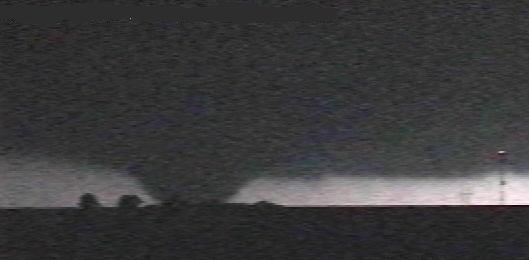
4.     Day or night - Loud, continuous roar or rumble, which doesn't fade in a few seconds like thunder.
5.     Night - Small, bright, blue-green to white flashes at ground level near a thunderstorm (as opposed to silvery lightning up in the clouds). These mean power lines are being snapped by very strong wind, maybe a tornado.
6.     Night - Persistent lowering from the cloud base, illuminated or silhouetted by lightning -- especially if it is on the ground or there is a blue-green-white power flash underneath.

WHAT TO DO...
In a house with a basement: Avoid windows. Get in the basement and under some kind of sturdy protection (heavy table or work bench), or cover yourself with amattress or sleeping bag. Know where very heavy objects rest on the floor above (pianos, refrigerators, waterbeds, etc.) and do not go under them. They may fall down through a weakened floor and crush you. Head protection, such as a helmet, can offer some protection also.
In a house with no basement, a dorm, or an apartment: Avoid windows. Go to the lowest floor, small center room (like a bathroom or closet), under a stairwell, or in an interior hallway with no windows. Crouch as low as possible to the floor, facing down; and cover your head with your hands. A bath tub may offer a shell of partial protection. Even in an interior room, you should cover yourself with some sort of thick padding (mattress, blankets, etc.), to protect against falling debris in case the roof and ceiling fail. A helmet can offer some protection against head injury.
In an office building, hospital, nursing home or skyscraper: Go directly to an enclosed, windowless area in the center of the building -- away from glass and on the lowest floor possible. Then, crouch down and cover your head. Interior stairwells are usually good places to take shelter, and if not crowded, allow you to get to a lower level quickly. Stay off the elevators; you could be trapped in them if the power is lost.
In a mobile home: Get out! Even if your home is tied down, it is not as safe as an underground shelter or permanent, sturdy building. Go to one of those shelters, using your tornado evacuation plan. Most tornadoes can destroy even tied-down mobile homes; and it is best not to play the low odds that yours will make it.
At school: Follow the drill! Go to the interior hall or room in an orderly way as you are told. Crouch low, head down, and protect the back of your head with your arms. Stay away from windows and large open rooms like gyms and auditoriums.
In a car or truck: Vehicles are extremely risky in a tornado. There is no safe option when caught in a tornado in a car, just slightly less-dangerous ones. If the tornado is visible, far away, and the traffic is light, you may be able to drive out of its path by moving at right angles to the tornado. Seek shelter in a sturdy building, or underground if possible. If you are caught by extreme winds or flying debris, park the car as quickly and safely as possible -- out of the traffic lanes. Stay in the car with the seat belt on. Put your head down below the windows; cover your head with your hands and a blanket, coat, or other cushion if possible. If you can safely get noticeably lower than the level of the roadway, leave your car and lie in that area, covering your head with your hands. Avoid seeking shelter under bridges, which can create deadly traffic hazards while offering little protection against flying debris.
In the open outdoors: If possible, seek shelter in a sturdy building. If not, lie flat and face-down on low ground, protecting the back of your head with your arms. Get as far away from trees and cars as you can; they may be blown onto you in a tornado.
In a shopping mall or large store: Do not panic. Watch for others. Move as quickly as possible to an interior bathroom, storage room or other small enclosed area, away from windows.
In a church or theater: Do not panic. If possible, move quickly but orderly to an interior bathroom or hallway, away from windows. Crouch face-down and protect your head with your arms. If there is no time to do that, get under the seats or pews, protecting your head with your arms or hands.

AFTER THE TORNADO...
Keep your family together and wait for emergency personnel to arrive. Carefully render aid to those who are injured. Stay away from power lines and puddles with wires in them; they may still be carrying electricity! Watch your step to avoid broken glass, nails, and other sharp objects. Stay out of any heavily damaged houses or buildings; they could collapse at any time. Do not use matches or lighters, in case of leaking natural gas pipes or fuel tanks nearby. Remain calm and alert, and listen for information and instructions from emergency crews or local officials.


Nobody is nay saying the wonders of modern medicine-what would we do without a medication like penicillin to treat infections? But, as it turns out, everyday items have secret curing powers, too. Next time you don't want to fork over money to get a common wart removed, consider using duct tape. Already popped two aspirin but can't get rid of the headache? A pencil could do the trick. Below, get medical explanations behind a few bizarre-albeit brilliant-MacGyver-esque home remedies. 
Duct Tape to Remove Warts 
In 2002, a group of doctors compared duct tape's effectiveness with liquid nitrogen in removing warts. After two months of wearing duct tape on a daily basis and using a pumice stone about once a week to exfoliate the dead skin, 85 percent of patients' warts were gone, whereas freezing only removed 60 percent. "The question is whether there is something in the chemical adhesive itself, or if the occlusion (suffocation) causes the destruction of the wart," says New York City-based dermatologist, Robin Blum, MD. "The other thinking is that the duct tape causes irritation, which stimulates our body's immune cells to attack the wart.
Vapor Rub to Cure Nail Fungus 
While there are no studies to prove coating infected toenails with vapor rub once or twice a day is an effective treatment for nail fungus, a basic Internet search results in a number of personal testaments to the medicinal ointment's fungus-killing powers. "I've heard many patients say that vapor rub does help, but I'm not exactly sure why," Dr. Blum admits. While some argue it's the menthol in the balm that kills the fungus and others say it's the smothering effect of the thick gel, if used consistently, vapor rub has been shown to get rid of not just the fungus, but the infected toenail, too, which will turn black and eventually fall off. When the new nail grows in, it should be fungus-free. 
Oatmeal to Soothe Eczema 
"This is absolutely true, as oats have anti-inflammatory properties," Dr. Blum says. Whether it's used as a paste or poured into a bath, most experts recommend choosing colloidal (finely ground) oatmeal and soaking the affected area for at least 15 minutes. In addition to reducing inflammation, oats are thought to have an antihistamine effect, Dr. Blum says. By lowering levels of histamine, which triggers inflammation as part of the immune system's recovery response, she explains, oats prevent or reduce the redness. 
Yogurt to Cure Bad Breath 
Bad breath comes from a number of places, the two most common being the mouth and the stomach. The neutralizing powers of yogurt and other probiotics treat the latter cause. "Yogurt shouldn't have any effect at all on the bacteria that live on the tongue because it's not there long enough," says Robert Meltzer, MD, a New York City-based gastroenterologist and attending physician at Lenox Hill Hospital. However, it likely has a neutralizing effect on the acid that resides anywhere between the mouth and the stomach, including the back of the throat and the esophagus, he explains. "I think almost any milk product or food that contains live cultures would have the same effect." While yogurt can get rid of bad breath that results from gastrological conditions, like acid reflux, it won't have any real effect on bad breath that is the product of gum, liver or lung disease, says Ohio-based dentist Matthew Messina, DDS. 
A Spoonful of Sugar to Cure Hiccups 
In 1971, Edgar Engelman, MD, conducted a study to find out if a spoonful of sugar really is an effective cure for hiccups. He assembled a group of 20 patients who had been experiencing intractable hiccups for more than six hours, eight of whom had had them anywhere from a full day to six weeks. Each of the test subjects was given one teaspoon of white granulated sugar to swallow dry, and for 19 of the 20 hiccup patients, the cure was immediate. André Dubois, MD, a gastroenterologist in Bethesda, Maryland, noted in The Doctors Book of Home Remedies that "the sugar is probably acting in the mouth to modify the nervous impulses that would otherwise tell the muscles in the diaphragm to contract spasmodically.
Bite a Pencil to Cure a Headache 
While doctors aren't sure why we do it, clenching our teeth is a common side effect of stress. According to Fred Sheftell, MD, director of the New England Center for Headache in Stamford, Connecticut, when we clench up, we strain the muscle that connects the jaw to the temples, which can trigger a tension headache. By placing a pencil between our teeth-but not biting down-we relax our jaw muscles, which eradicate tension and reduce pain. Just remember, the remedy really only applies to tension headaches-not migraines or headaches caused by sinus pressure, etc.
Olives for Motion Sickness 
According to the National Library of Medicine, there are a number of symptoms that present themselves as a result of motion sickness, including increased salivation, which is the body's way of protecting the teeth from the high doses of acid accompanied by vomit. Enter olives, which contain tannins that, when released in the mouth, work to dry saliva-first eliminating the symptom and then the body's instinct to follow suit. However, the treatment is only effective during the early stages of nausea, when the salivation changes first appear. 
Gargle Saltwater For A Sore Throat 
When you were a kid and had a sore throat, your mom likely made you gargle warm water with salt in it...and she was definitely on to something. According to Douglas Hoffman MD, PhD, author of the website The Medical Consumer's Advocate, a sore throat is an inflammatory response of the infected tissues, and the salt helps draw out the excess fluid to temporarily decrease swelling and the pain it causes. Most remedies call for a ratio of 1 tablespoon salt to 8 ounces of water, but it's always better to opt for more salt rather than less. Just keep in mind that you are treating the symptoms-not the illness. As Dr. Hoffman notes on his website: "The relief is very real, but also tends to be short-lived, since the gargle has done nothing to remove the cause of the sore throat.

Wednesday, February 1, 2012


Did you know . . . Shoveling snow by hand can burn approximately 400 calories per hour? But be careful, as there are many risks that can accompany snow shoveling. Some tips to remember:

1) This is hard work; can your body handle it? If you have heart problems maybe you should skip this one and pay the neighbor kid.

2) Stretch. Ease in to the chore. Keep your muscles warm by dressing appropriately.

3) Split up the chore. Work 10 minutes, take a break by going inside; hydrate and stretch for 5 minutes.
Then return to shoveling snow for another 10 minutes.

4) Use good lifting techniques; try to push the snow off the concrete
.
5) Spend an extra $10 and get a good snow shovel.

6) Falling on ice hurts; wear shoes with good traction.

Finally, what are you doing with this snow? Piling snow in the street for the City plow to take away on the next round should not be an option. Cars traveling on your road are not expecting sporadic mounds of snow in the roadway. The streets are already slick making it difficult to stop. If a vehicle strikes your mound of snow it easily could cause damage to the low bumpers or cause undercarriage damage.
Be considerate.
Have a safe winter!

Dangerous Foods for Dogs

With the TownePlace Suites being a pet friendly hotel, and myself being a pet lover, I am always on the lookout for information when it comes to the safety of our furry little friends.  Who can resist those big brown eyes and cute doggie grin? Can a little reward from the table really hurt your dog? Well, that depends on what it is and what's in it. A chip with guacamole can cause your dog some real problems. In fact, there's a lot of people food your dog should never eat. And, it's not just because of weight. Some foods are downright dangerous for dogs -- and some of these common foods may surprise you.

Avocado:  No matter how good you think the guacamole is, you shouldn't give it to your dog. Avocados contain a substance called persin. It's harmless for humans who aren't allergic. But large amounts might be toxic to dogs. If you happen to be growing avocados at home, keep your dog away from the plants. Persin is in the leaves, seed, and bark, as well as in the fruit.

Alcohol:   Beer, liquor, wine, foods containing alcohol -- none of its good for your dog. That's because alcohol has the same effect on a dog's liver and brain that it has on humans. But it takes far less to do its damage. Just a little can cause vomiting, diarrhea, central nervous system depression, problems with coordination, difficulty breathing, coma, even death. And the smaller the dog, the greater the effect.

Onions and Garlic:  Onions and garlic in all forms -- powdered, raw, cooked, or dehydrated -- can destroy a dog's red blood cells, leading to anemia. That can happen even with the onion powder found in some baby food. An occasional small dose is probably OK. But just eating a large quantity once or eating smaller amounts regularly can cause poisoning. Symptoms of anemia include weakness, vomiting, little interest in food, dullness, and breathlessness.

Coffee, Tea, and Other Caffeine:  Caffeine in large enough quantities can be fatal for a dog. And, there is no antidote. Symptoms of caffeine poisoning include restlessness, rapid breathing, heart palpitations, muscle tremors, fits, and bleeding. In addition to tea and coffee - including beans and grounds -- caffeine can be found in cocoa, chocolate, colas, and stimulant drinks such as Red Bull. It's also in some cold medicines and pain killers.

Grapes and Raisins:  Grapes and raisins have often been used as treats for dogs. But it's not a good idea. Although it isn't clear why, grapes and raisins can cause kidney failure in dogs. And just a small amount can make a dog ill. Repeated vomiting is an early sign. Within a day, the dog will become lethargic and depressed. The best prevention is to keep grapes and raisins off counters and other places your dog can reach.

Milk & Other Dairy Products:  On a hot day, it may be tempting to share your ice cream cone with your dog. But if your dog could, it would thank you for not doing so. Milk and milk-based products can cause diarrhea and other digestive upset as well as set up food allergies (which often manifest as itchiness).

Macadamia Nuts:  Dogs should not eat macadamia nuts or foods containing macadamia nuts because they can be fatal. As few as six raw or roasted macadamia nuts can make a dog ill. Symptoms of poisoning include muscle tremors, weakness or paralysis of the hindquarters, vomiting, elevated body temperature, and rapid heart rate. Eating chocolate with the nuts will make symptoms worse, possibly leading to death.

These are just some of the dangerous foods for our furry little friends.  For a complete list of foods that are dangerous to our doggy and kitty companions, check out this website;     

 http://www.aspca.org/pet-care/poison-control/people-foods.aspx

Friday, November 4, 2011

Don't Move Twice!

When you are considering where to stay so you can see all the sites you should consider staying with us.  We offer the perfect location so you will not have to move more than once! 
One check in and you can see our local sites all with-in 15 minutes drive:  St. Louis Zoo, Arch/Riverfront, Forest Park, Six Flags are just a few.
Also if you want to see (Downtown St. Louis) or (Old Town St. Charles) we sit right in between both of them so you can spend a day in both with out packing up to stay somewhere else.  These Cities are big draws to families because they can see (Art Exhbitions, Ice Shows, Rodeos, Concerts, Broadway Style Shows, and the Rich Cultural History both cities have to offer).
We’ve had more and more guests telling us that they are staying with us due to NOT having to pack again and still being able to see everything our area has to offer!  So if you’re trying to figure out how to maximize your time and not have to go to multiple hotels to do it… check in here and take one less worry from your plans.

Change the Time

Spring forward...Fall back....
It's ingrained in our consciousness almost as much as the A-B-Cs or our spelling reminder of "i before e...." And it's a regular event, though perhaps a bit less regular than the swallows coming back to Capistrano.
Yet in those four words is a whole collection of trivia, facts and common sense about Daylight Saving Time.

Beginning in 2007, Daylight Saving Time is extended one month and begins for most of the United States at:

2 a.m. on the Second Sunday in March

and lasts until

2 a.m. on the First Sunday of November.

The new start and stop dates were set in the Energy Policy Act of 2005.

Daylight Saving Time - for the U.S. and its territories - is NOT observed in Hawaii, American Samoa, Guam, Puerto Rico, the Virgin Islands, and by most of Arizona (with the exception of the Navajo Indian Reservation in Arizona).


Daylight Saving Time Saves Energy
One of the biggest reasons we change our clocks to Daylight Saving Time (DST) is that it reportedly saves electricity. Newer studies, however, are challenging long-held reason.
In general, energy use and the demand for electricity for lighting our homes is directly connected to when we go to bed and when we get up. Bedtime for most of us is late evening through the year. When we go to bed, we turn off the lights and TV.
In the average home, 25 percent of all the electricity we use is for lighting and small appliances, such as TVs, VCRs and stereos. A good percentage of energy consumed by lighting and appliances occurs in the evening when families are home. By moving the clock ahead one hour, we can cut the amount of electricity we consume each day.
Daylight Saving Time "makes" the sun "set" one hour later and therefore reduces the period between sunset and bedtime by one hour. This means that less electricity would be used for lighting and appliances late in the day. We may use a bit more electricity in the morning because it is darker when we rise, but that is usually offset by the energy savings in the evening.
In the winter, the afternoon Daylight Saving Time advantage is offset by the morning's need for more lighting. In spring and fall, the advantage is less than one hour. So, Daylight Saving Time saves energy for lighting in all seasons of the year except for the four darkest months of the year (November, December, January and February) when the afternoon advantage is offset by the need for lighting because of late sunrise.
History of Daylight Saving Time
Daylight Saving Time is a change in the standard time of each time zone. Time zones were first used by the railroads in 1883 to standardize their schedules. According to the The Canadian Encyclopedia Plus by McClelland & Stewart Inc., Canada's "[Sir Sandford] Fleming also played a key role in the development of a worldwide system of keeping time. Trains had made obsolete the old system where major cities and regions set clocks according to local astronomical conditions. Fleming advocated the adoption of a standard or mean time and hourly variations from that according to established time zones. He was instrumental in convening an International Prime Meridian Conference in Washington in 1884 at which the system of international standard time -- still in use today -- was adopted.”

Daylight Saving Time has been around for most of this century and even earlier.

Benjamin Franklin, while a minister to France, first suggested the idea in an essay titled "An Economical Project for Diminishing the Cost of Light." The essay was first published in the Journal de Paris in April 1784. But it wasn't for more than a century later that an Englishman, William Willett, suggested it again in 1907.

In 1918, in order to conserve resources for the war effort, the U.S. Congress placed the country on Daylight Saving Time for the remainder of WW I. It was observed for seven months in 1918 and 1919. The law, however, proved so unpopular that it was later repealed.
When America went to war again, Congress reinstated Daylight Saving Time on February 9, 1942. Time in the U.S. was advanced one hour to save energy. It remained advanced one hour forward year-round until September 30, 1945.
From 1945 to 1966, there was no U.S. law about Daylight Saving Time. So, states and localities were free to observe Daylight Saving Time or not.

This, however, caused confusion -- especially for the broadcasting industry, and for trains and buses. Because of the different local customs and laws, radio and TV stations and the transportation companies had to publish new schedules every time a state or town began or ended Daylight Saving Time.

By 1966, some 100 million Americans were observing Daylight Saving Time through their own local laws and customs. Congress decided to step in end the confusion and establish one pattern across the country. The Uniform Time Act of 1966 (15 U.S. Code Section 260a) created Daylight Saving Time to begin on the last Sunday of April and to end on the last Sunday of October. Any area that wanted to be exempt from Daylight Saving Time could do so by passing a local ordinance. We’ve Had DST in one form or another ever since.